












What’s Included in Affordable Plumbing Services in NYC
Affordable plumbing in NYC means transparent upfront pricing, no hidden trip fees, free diagnostics when you proceed with the repair, and a 1-year warranty on every job — no exceptions.
What does affordable plumbing actually cost in NYC?
| Service | Typical price range | What’s included |
|---|---|---|
| Drain cleaning (kitchen) | $150–$300 | Snake up to 50 ft, full water flush test |
| Toilet repair | $125–$350 | Flapper, fill valve, or flush valve replacement |
| Water heater repair | $290–$1,130 | Thermocouple, burner, element, or gas valve fix |
| Leak detection | $150–$400 | Visual, meter, pressure, and thermal scan |
| Pipe repair | $400–$1,500 | Copper, PEX, or galvanized section replacement |
| Faucet replacement (kitchen) | $290–$710 | Unit removal, new faucet install, leak test |
What’s included in our service — beyond the price
- Free diagnostic with repair: The $0 diagnostic fee is credited toward the job — you only pay for the work, not the look.
- Same-day scheduling: We arrive within 60–90 minutes for emergencies across all 5 boroughs, 7 days a week.
- 1-year warranty: Every repair comes with 365 days of parts and labor coverage — no fine-print exclusions.
- OEM-spec parts: We use manufacturer-spec replacement parts, not generic knockoffs that fail in 6 months.
- Licensed technicians: NYC DOB Licensed Master Plumbers handle every job — from a Brooklyn brownstone to a Manhattan high-rise.
Who will be working in your home?
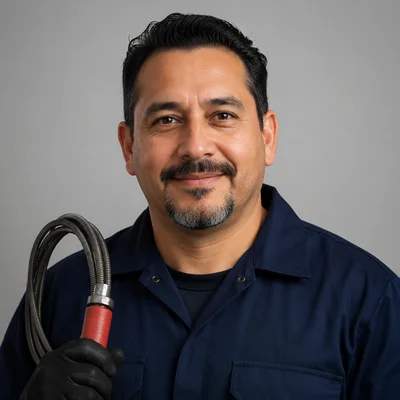
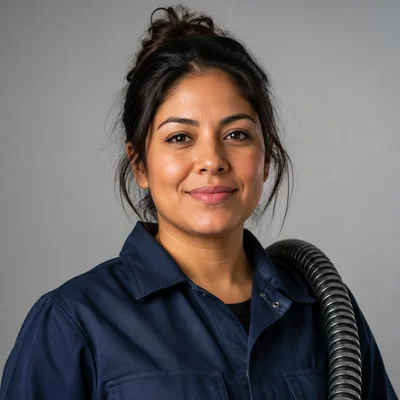
Our technicians are NYC DOB Licensed Master Plumbers with field experience across all 5 boroughs — from pre-war Manhattan co-ops where the risers are still galvanized to Brooklyn brownstones with original cast-iron stacks. Every truck carries OEM-spec parts for Moen, Kohler, Delta, and American Standard fixtures, plus the tools to handle whatever surprises a 1920s building throws at you: flange plungers for stubborn toilet clogs, thermal imaging cameras for slab leaks, and drain scopes that reach 100 ft into a main line. In the field, I see the difference this makes daily — a Master Plumber knows how a corroded cast iron tee in a Bronx pre-war behaves differently than PEX in new construction, and that experience saves you from repeat callbacks.
How Do I Know If I Need a Water Heater Repair or Replacement?
Water heater decisions come down to age, leak location, and cost comparison. Here’s how we diagnose which route makes sense for your NYC home.
Age check: is your water heater past its prime?
We check the serial number on every water heater call — in NYC’s hard water, tank units typically last 8–12 years, and if yours is over 10 years old, replacement is usually more cost-effective than repair. The date code is stamped on the manufacturer’s rating plate near the bottom of the tank; on a Rheem or Bradford White unit, the serial number’s first two digits decode the year of manufacture. From experience, I see a lot of homeowners in Brooklyn and Queens try to squeeze another year out of a 12-year-old tank, only to have it fail mid-winter — the repair cost ($290–$1,130) often ends up being over half the replacement cost ($2,400–$3,500), which is our rule of thumb for recommending replacement.
Leak location: where’s the water coming from?
- T&P valve drip: Small drips from the temperature-and-pressure relief valve can often be repaired — a new T&P valve costs about $30–$60 in parts, and the repair runs $290–$1,130.
- Drain valve weep: A slow leak from the plastic drain valve at the bottom of the tank is also repairable; we replace the valve with a brass ball-valve type that won’t crack over time.
- Pooling water around the base: This means the tank itself has failed — the inner steel lining has corroded through, and no repair can fix it. Replacement at $2,400–$3,500 is the only option.
- Water on top of the tank: Condensation from cold supply lines or a loose inlet connection — often a simple fitting tighten, not a tank issue.
- Floor damage warning: I’ve seen too many homeowners ignore a puddle under the water heater for weeks, thinking it’s condensation — by the time they call, the floor is damaged and the unit is beyond saving.
No hot water: gas vs electric diagnosis
| Component | Gas water heater | Electric water heater |
|---|---|---|
| Pilot / breaker | Pilot light out? Check thermocouple — 30-min diagnostic | Tripped breaker? Reset and test — 20-min diagnostic |
| Ignition / element | Gas valve not opening? Burner assembly may need cleaning | Upper heating element failed? Multimeter test confirms |
| Thermostat | Gas valve thermostat may be set too low or faulty | Upper or lower thermostat may be out of calibration |
| Sediment | Heavy sediment insulates burner — rumbling noise, slow recovery | Sediment cakes lower element — element burns out prematurely |
| Typical repair cost | $290–$1,130 | $290–$1,130 |
Signs of a Hidden Water Leak — and How We Find It
Hidden leaks waste water, damage your home, and spike your bill. Here’s what to watch for and how we track them down without tearing open walls.
What are the telltale signs of a hidden water leak?
- Unexplained water bill jump: A 20%+ increase without added usage points to a hidden leak — check your quarterly NYC water bill against prior periods.
- Musty odors and mold: Persistent damp smell near a wall or baseboard means moisture is wicking up from a leak below, often around toilets or under sinks.
- Warm spots on floors: In Brooklyn and Queens houses with slab foundations, a hot water line leaking under concrete creates warm patches on the flooring above.
- Sound of running water: When all fixtures are off, listen for water moving in the walls — press a stethoscope against the drywall to narrow the location.
- Water meter still spinning: Turn off every fixture and check the meter. If it keeps turning, a leak is present somewhere in the system.
How do you find a hidden leak without breaking walls?
We use water meter tests, pressure testing, thermal imaging, and acoustic detection — non-invasive methods that locate leaks without unnecessary demolition. The water meter test is the fastest: shut off all fixtures and check if the meter continues to spin. If it does, we move to a pressure test — attach a gauge to an outdoor spigot or washing machine valve. NYC municipal water runs at 40–80 PSI; a rapid pressure drop confirms a leak in the line. The thermal imaging camera is my go-to for slab leaks in Staten Island houses — it picks up temperature differences from hot water leaking under concrete, and I can pinpoint the leak within inches before we cut anything. Acoustic detection with a ground microphone catches the sound of water escaping through cracks or loose fittings.
How to Prevent Clogged Drains in Your NYC Apartment
Most drain clogs are preventable with simple habits. Here’s what works in NYC apartments — from kitchen sinks to main lines.
Kitchen sink: what not to put down the drain
- Grease and oil: Never pour fats, oils, or grease down the sink — NYC’s FOG (fats, oils, grease) program targets this specifically. It solidifies in pipes and binds with food scraps into concrete-like blockages.
- Food scraps: Use a mesh strainer to catch particles before they reach the pipes. Even small rice grains accumulate over weeks inside the P-trap and downstream.
- Fibrous foods: Celery, corn husks, and potato peels wrap around the impeller in garbage disposals and tangle inside drain lines — they belong in the trash, not the sink.
- Chemical drain cleaners: Avoid them — they damage old cast iron and PVC pipes. A kitchen drain cleaning runs $150–$300 with a snake and water flush, which is cheaper than replacing corroded pipe sections.
- Monthly maintenance: Pour ½ cup baking soda + ½ cup vinegar down the drain, wait 15 minutes, then flush with boiling water. It breaks up early-stage buildup before it becomes a clog that needs professional drain cleaning.
Bathroom drains: hair is the #1 enemy
Hair is the #1 cause of bathroom sink and shower clogs — a simple hair catcher like a Tub Shroom installed today can save you a $120–$250 drain cleaning next month. In NYC apartments with shared plumbing stacks, a hair clog in your shower can actually back up into your neighbor’s unit below; I’ve seen it happen in pre-war buildings where the venting is shared across floors. The hair wraps around the pop-up stopper mechanism in sinks or the drain crossbars in showers, then traps soap scum and mineral deposits from NYC’s hard water. Over three to four months, that combination forms a dense mat that a plunger can’t break through. Clean the hair catcher after every shower — nine times out of ten, that’s the only step you need to keep the drain running freely.
Toilets and “flushable” wipes: the truth
Only flush human waste and toilet paper — “flushable” wipes are NOT flushable and cause 90% of NYC sewer clogs, per NYC DEP data. I’ve pulled wipes out of main lines in Brooklyn brownstones that were packed so tight they looked like a solid log — and the homeowner had been flushing them “for years without issues” until the sewer backed up into the basement. Feminine products, cotton swabs, dental floss, and paper towels also don’t break down in water the way toilet paper does; they accumulate at joints and bends in the cast iron stack. A main line cleaning for a wipe blockage runs $350–$1,000, and if the obstruction is deep enough that we need a drain camera to locate it, the diagnostic fee is waived when you book the repair. Stick to the three-P rule — pee, poop, and paper — and you’ll never need that call.
What to Do If Your Toilet Is Overflowing
A toilet overflow is stressful, but you can stop the damage in seconds. Here’s exactly what to do — and when to call us.
Step 1: Stop the water immediately
- Lift the float cup: Reach into the tank and lift the float cup or float ball to close the fill valve — this stops the refill immediately.
- Shut the supply valve: Turn the small valve behind the toilet clockwise until it stops; this cuts water to the bowl completely.
- Press the flapper down: If the bowl is still rising, push the rubber flapper at the tank bottom with your finger to seal it shut.
- Contain the spill: Drop towels around the base and grab a wet/dry vac if water is spreading across the floor.
- Know your valve location: Most NYC apartments have the supply valve right behind the toilet, but in pre-war buildings it might be under the sink or behind an access panel — know where yours is before an emergency.
Step 2: Plunge correctly — flange plunger only
Use a flange plunger — the one with the rubber bellows and a soft flange at the bottom — because a cup plunger won’t create the right seal for a toilet drain. Place the flange inside the bowl opening, push down to form a tight seal, and give 5–10 firm thrusts without breaking the seal. After plunging, do not flush the toilet; instead, pour a bucket of water into the bowl to see if the drain clears. I can’t count how many calls I’ve taken where someone plunged for 20 minutes with a cup plunger, made the clog worse by pushing it deeper, and then called us — a $125–$350 repair that could have been a $10 plunger fix.
When to call a plumber — and what to expect
If plunging doesn’t clear the clog after 5–10 firm thrusts, or if water backs up from multiple fixtures, call a plumber immediately — you may have a main line blockage. A toilet repair from us runs $125–$350 and includes snaking the drain or removing the toilet to clear the obstruction from the bottom. If water is backing up from your tub or sink when you flush the toilet, that’s a main line clog — don’t use any water in the apartment until we arrive, or you’ll flood the lowest fixture (usually the basement or ground floor). Main line cleaning runs $350–$1,000 and uses a 50–100 ft drain camera to identify the blockage before we clear it.
Main Takeaways for Finding Affordable Plumbing Services in NYC
Main takeaways for finding affordable plumbing services in NYC
Affordable plumbing services in NYC start with transparency — knowing what you’re paying for, what’s included, and when to call a professional. The key is distinguishing between a $125 toilet repair and a $475 replacement, or a $150 drain cleaning versus a $1,000 main line job. On older Brooklyn brownstones with cast-iron stacks, the real savings come from catching problems early: a $150 leak detection today can prevent a $1,500 pipe repair next month. Our 1-year warranty on parts and labor means that $290 water heater repair is covered for a full year, not just 90 days. And the $0 diagnostic with repair removes the guesswork — you pay for the fix, not the look. From experience, the most expensive plumbing job is the one you put off.