













What Does a Plumber Do in NYC?
A licensed plumber handles everything from clearing a clogged kitchen drain to replacing a gas water heater — the work spans drain cleaning, pipe repair, fixture installation, leak detection, and sewer service across all five boroughs.
Drain Cleaning, Pipe Repair & Fixture Installation
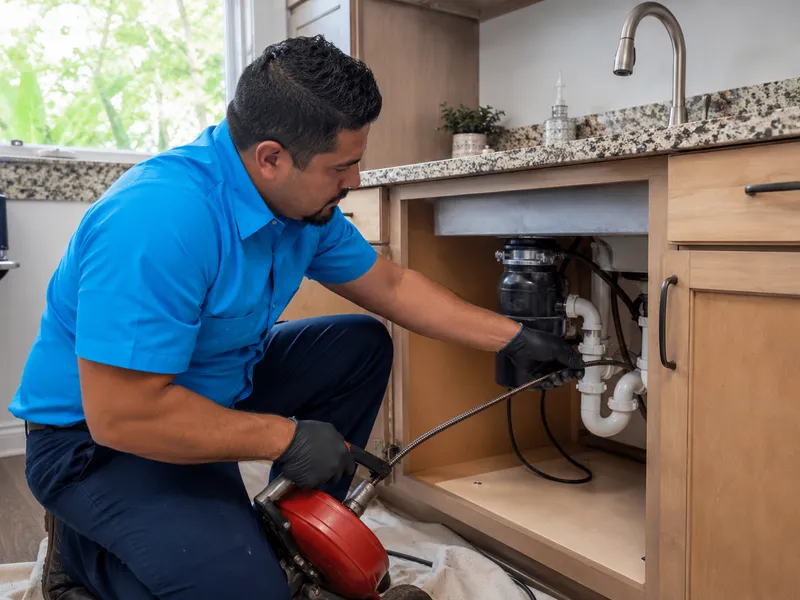
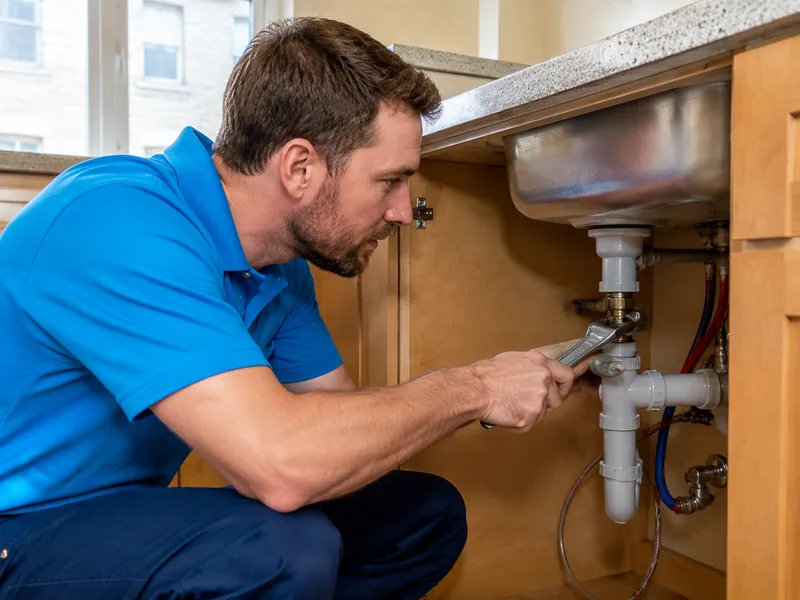
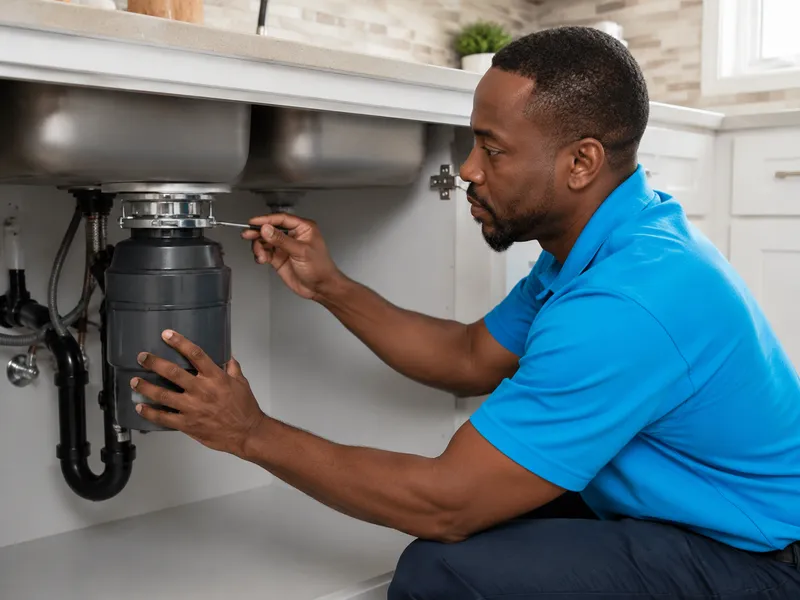
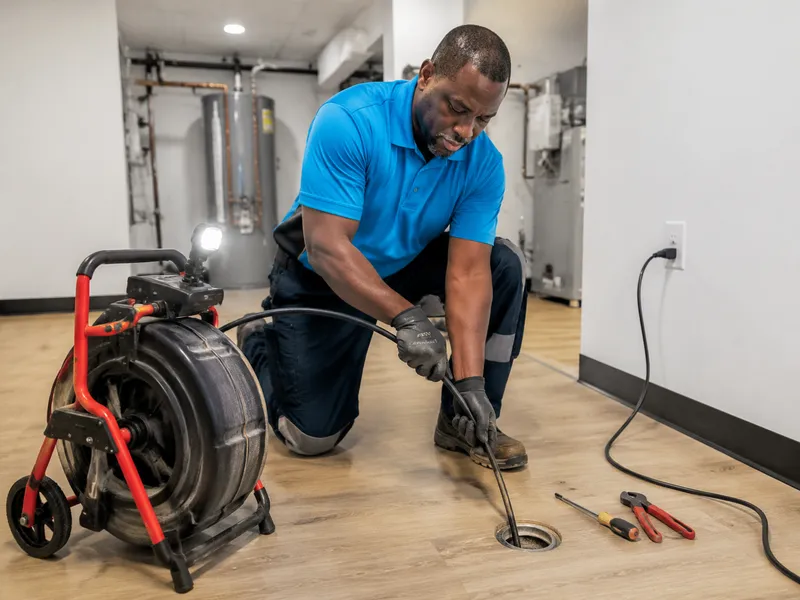
- Drain cleaning — kitchen: We clear grease clogs using a ⅜-inch cable auger, $150–$300 per drain. Bathroom drains run $120–$250.
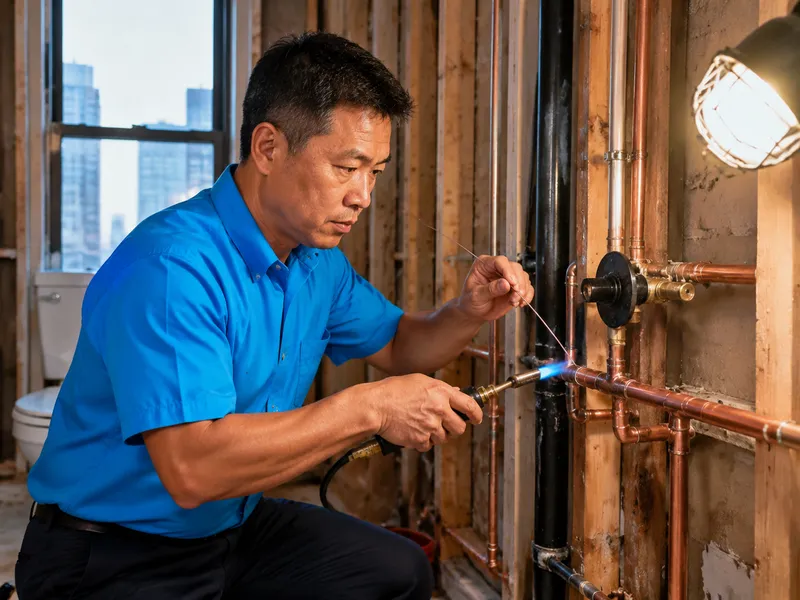
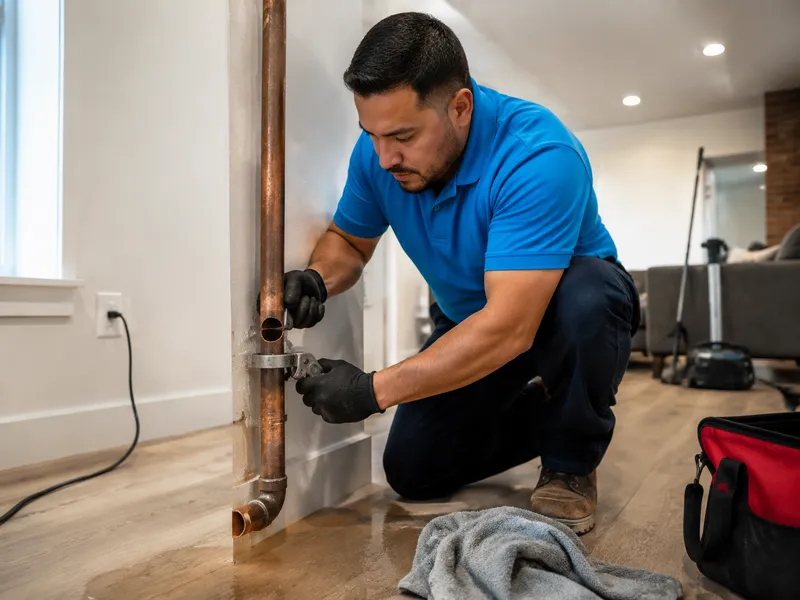
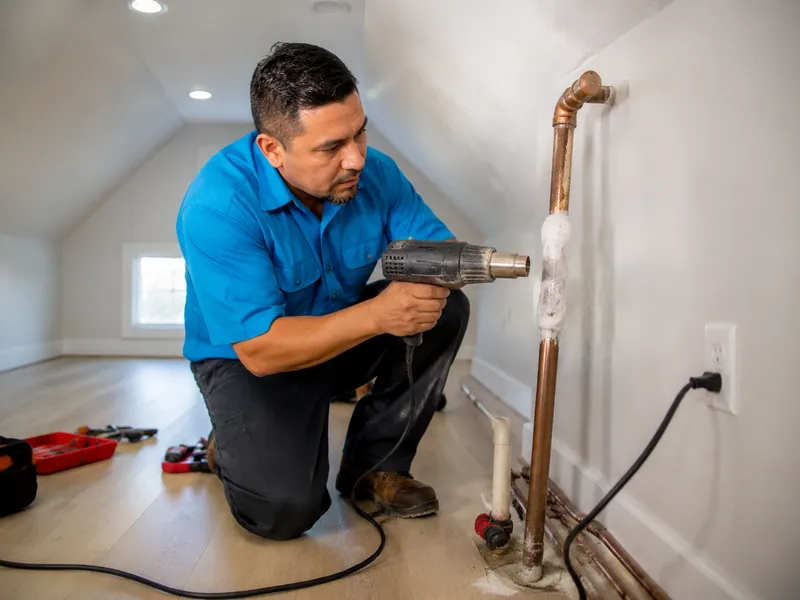
- Pipe repair — basic: Burst copper or galvanized pipe repairs run $400–$1,500, depending on wall access and material. In Brooklyn brownstones we regularly transition from old galvanized to copper using dielectric unions.
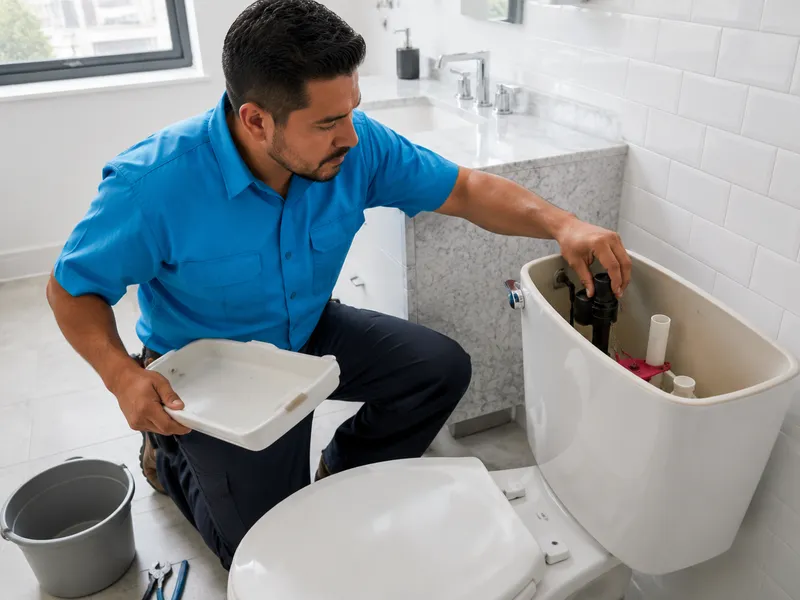
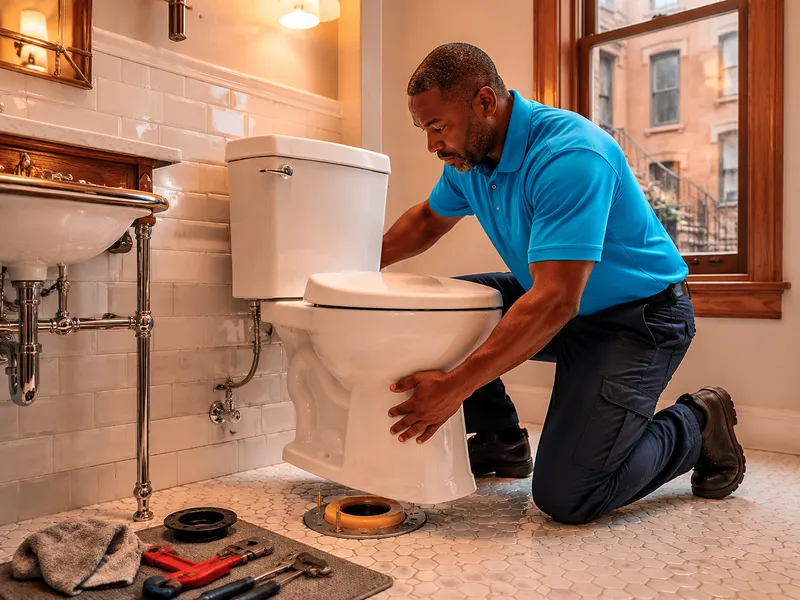
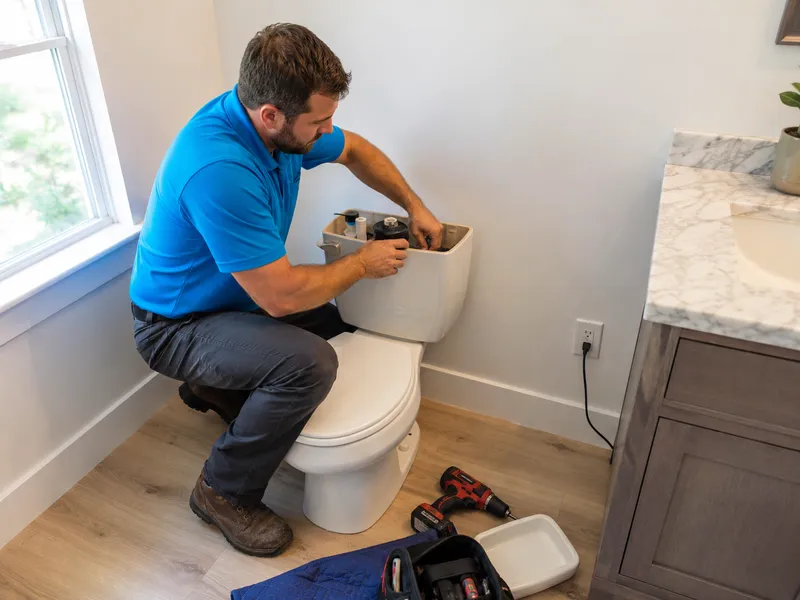
- Toilet repair: Running toilets, leaking wax rings, and cracked bowls — $125–$350. Most calls are a bad flapper or fill valve.
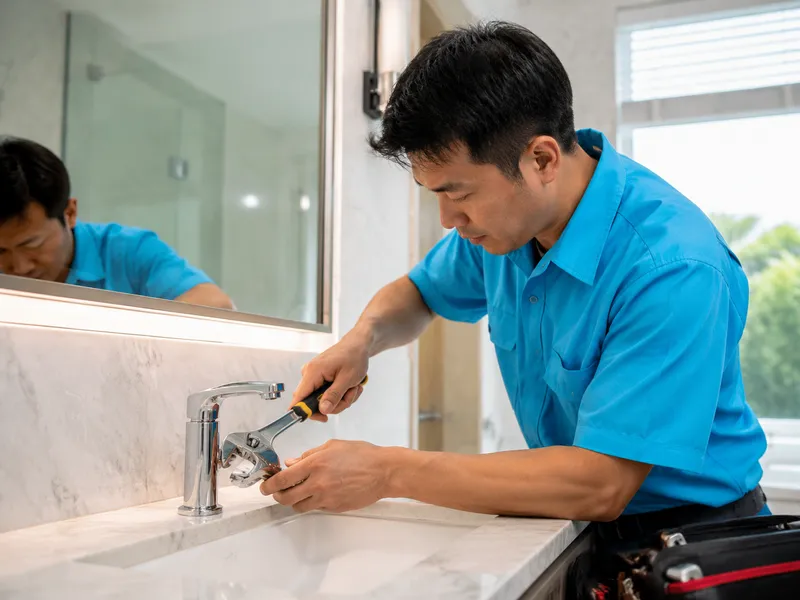
- Faucet replacement: Kitchen faucets $290–$710; bathroom $170–$360. We work with Moen, Kohler, Delta, and American Standard cartridges.
- Key insight: Kitchen drains clog faster from grease buildup than bathroom drains from hair, so annual cleaning prevents emergency backups.
Water Heater Service & Leak Detection
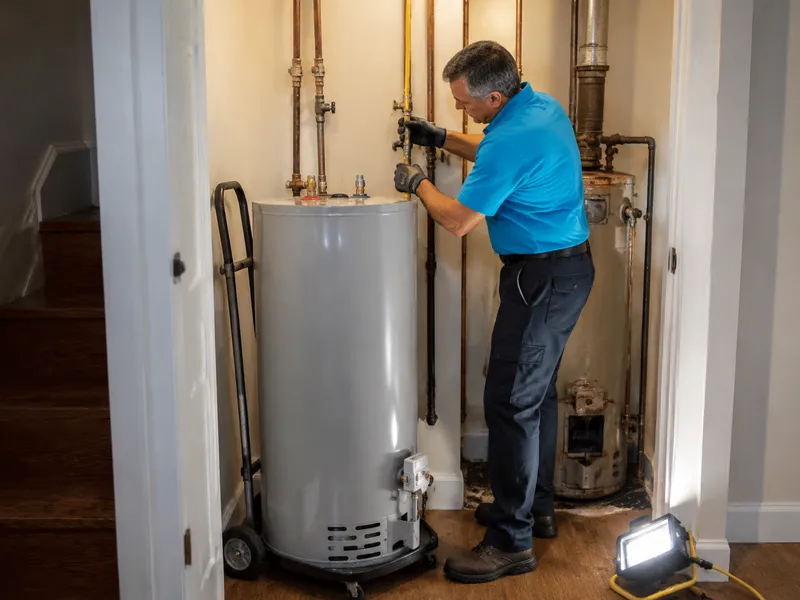
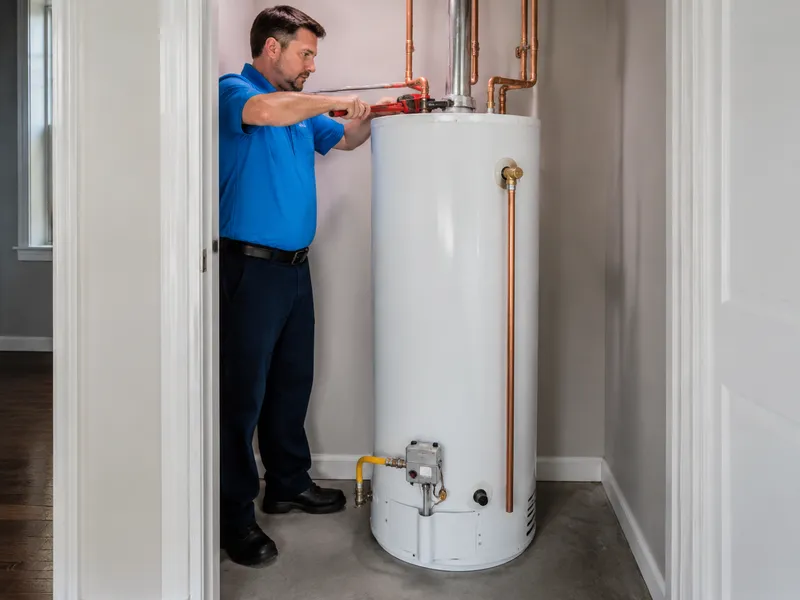
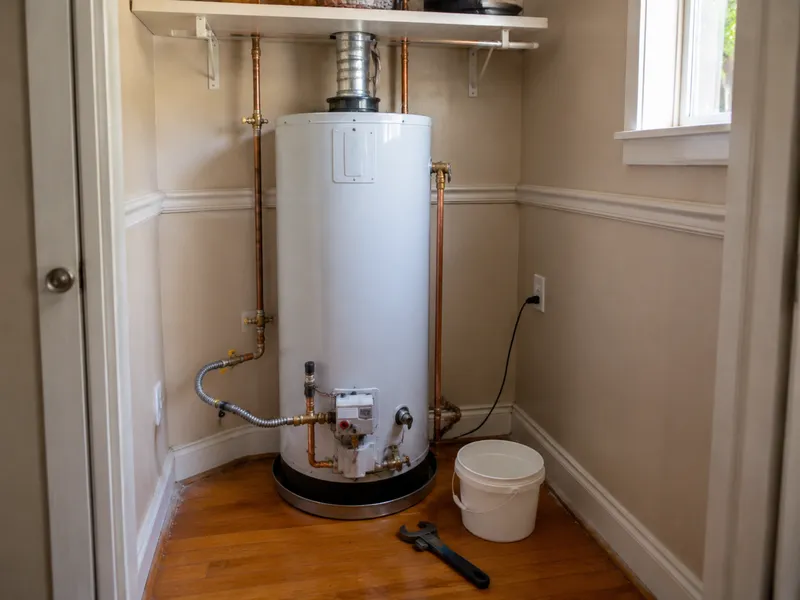
We repair and replace gas and electric water heaters — a 50gal gas unit installation runs $2,400–$3,500 — and perform leak detection ($150–$400) using visual inspection, pressure testing, and thermal imaging. For tank water heaters, we carry Rheem, Bradford White, and A.O. Smith units. On the diagnostic side, we isolate hidden leaks behind walls or under slab floors by pressurizing the line and listening with acoustic sensors. NYC’s moderately hard water (7–8 grains/gallon) accelerates sediment buildup in tank water heaters, making annual flushing essential to extend lifespan beyond 8–12 years.
Gas Line Work & Sewer Line Service
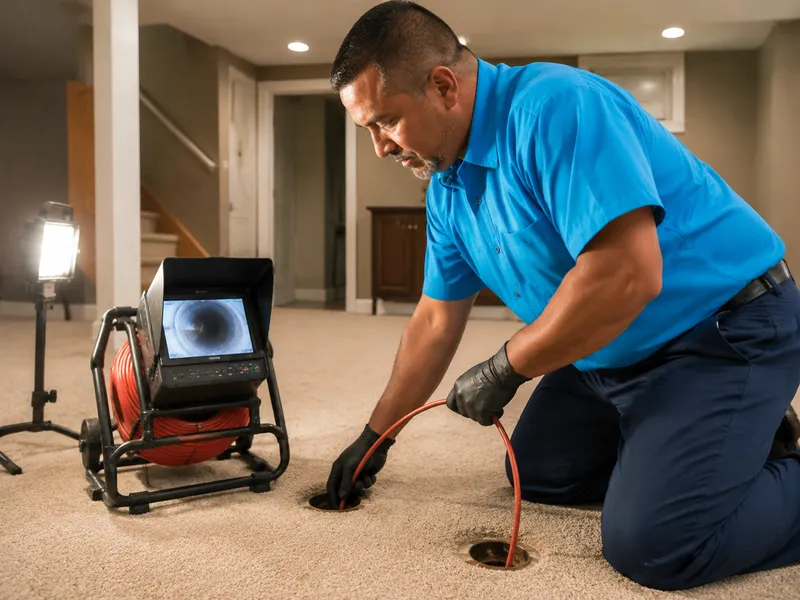
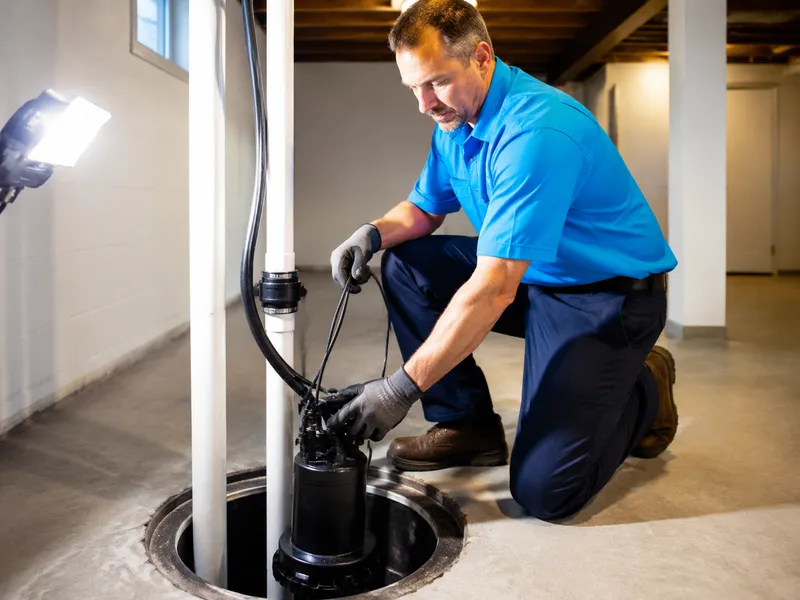
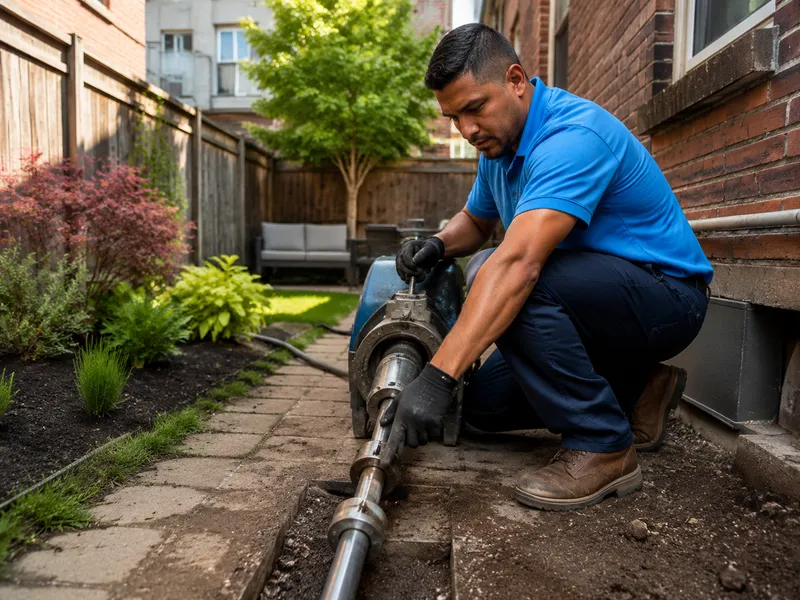
We perform gas line work requiring a DOB permit and Licensed Master Plumber, plus sewer line service including main line cleaning ($350–$1,000), camera inspection, and trenchless pipe lining. Gas line modifications — running a new line for a stove or generator — demand a permit pulled with the NYC Department of Buildings and inspection sign-off. For sewer laterals, we snake the main line first, then camera-inspect to confirm the blockage source. Tree roots from London plane trees common in Brooklyn infiltrate clay sewer laterals, and rooter service clears them temporarily — trenchless lining lasts 50+ years as a permanent fix.
When Should I Call a Plumber in NYC?
Knowing the line between a DIY fix and an urgent call can save your property — call immediately for no hot water, burst pipes, gas smell, sewage backup, or ceiling drips.
Emergency Situations: Burst Pipes, Gas Smell & Sewage Backup
- Burst pipe: Shut the main water valve first — usually in the basement at the front wall — then call us. We respond within 60–90 minutes across all 5 boroughs.
- Gas smell: Rotten-egg odor means a leak. Leave the building immediately, call 911 from outside, then call us for gas line repair — do not flip any switch.
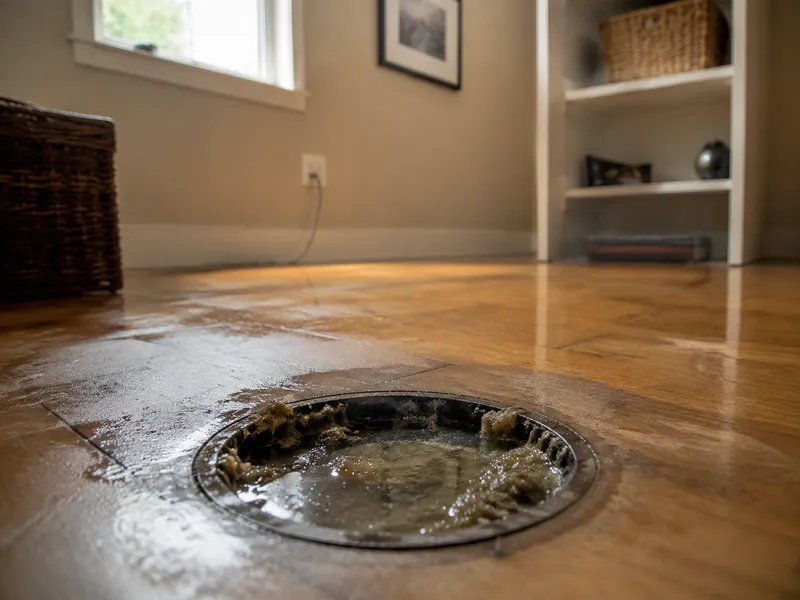
- Sewage backup: Water rising from drains or gurgling toilets signals a main line clog or sewer lateral issue. Stop using all fixtures and call — it’s a health hazard.
- Ceiling drip: An active leak from an overhead pipe. Turn off water at the nearest valve and call; water damage compounds by the hour.
- NYC winter reality: In December through February, burst pipes spike when temps drop below 20°F for 6+ hours in unheated brownstone basements and exterior walls.
Non-Emergency but Urgent: No Hot Water, Running Toilet & Low Pressure
- No hot water over 2 hours: Call same-day — a failed thermocouple, gas valve, or heating element won’t fix itself. We offer same-day service 7 days a week.
- Running toilet wasting 200+ gallons/day: If a flapper replacement didn’t stop it, the fill valve or flush valve likely needs replacing. That’s a $125–$350 repair.
- Low water pressure throughout the building: Not a fixture problem — a failed pressure-reducing valve (PRV) often causes 80+ PSI that blows toilet fill valves and faucet cartridges.
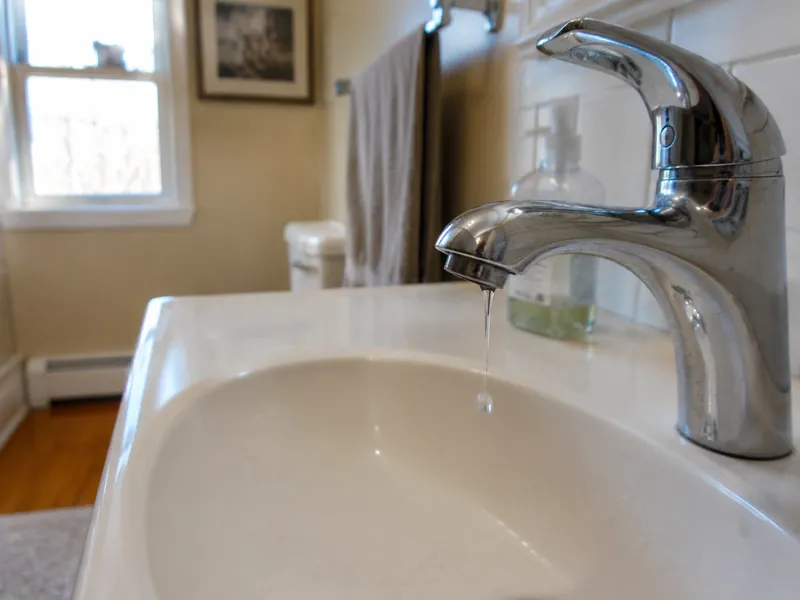
- Dripping faucet you can’t stop: A worn cartridge or o-ring in a Moen 1225 or Delta ball joint leaks steadily; call before it wastes 3,000+ gallons a month.
- Slow drains in multiple fixtures: If plunging one sink makes another gurgle, the shared vent stack or main line needs clearing — not a single-trap clog.
Water Heater Warning Signs
Call us when your water heater shows rusty water, rumbling noises from sediment, leaks at the base, or inconsistent temperature — if the tank is 10+ years old, replacement is more cost-effective than repair. Rusty water means the anode rod is depleted and the tank interior is corroding; rumbling indicates trapped sediment boiling under the burner. A leaking base is tank failure — it cannot be patched, only replaced. In NYC’s moderately hard water (7–8 grains/gallon), sediment accumulates 2–3× faster than the national average. A depleted anode rod causes rusty water and signals imminent tank failure; flushing the tank annually removes sediment and extends life by 2–3 years in NYC’s hard water conditions.
How to Find a Good Plumber Near Me in NYC
Finding a good plumber in NYC starts with verifying a DOB Master Plumber license, checking warranty length, and confirming service area coverage across all 5 boroughs.
Verify License & Warranty Before You Book
- NYC DOB Master Plumber license: We hold one — verify any plumber’s license number on the DOB BIS website for free; unlicensed gas work is the #1 cause of NYC gas leaks.
- 1-year warranty on parts and labor: That’s the premium standard in NYC; if a plumber offers less than 90 days warranty, that’s a red flag — entry-level operators cap at 90 days.
- Journeyman works under a Master: The person who shows up may be a journeyman — ask who holds the license; the Master Plumber is legally responsible for the work.
- Free diagnostic when you book the repair: A reputable plumber waives the diagnostic fee if you proceed; if they charge $100+ just to show up and it’s not credited, shop around.
- Fully stocked vans mean same-day fix: We carry common parts — toilet flappers, fill valves, faucet cartridges, pipe fittings — so most repairs finish in one visit, not two.
Check Service Area, Response Time & Pricing Transparency
- Full 5-borough coverage: We serve Manhattan, Brooklyn, Queens, Bronx, and Staten Island — some plumbers only cover 2-3 boroughs, which limits emergency availability.
- 60–90 minute emergency response: That’s the window for burst pipes and gas leaks; same-day service is standard for non-emergency calls like running toilets or low water pressure.
- Upfront pricing before work starts: We give a price range or firm quote before touching anything — beware of “we’ll tell you after we look” without a diagnostic fee structure.
- No overtime charges for evenings or weekends: Our regular hours run Mon–Sun 8 AM – 9 PM, so a 7 PM toilet replacement doesn’t cost more than a 10 AM one — many plumbers add time-and-a-half after 5 PM.
- Plumbers who carry common parts fix same-day: Those who “need to order parts” mean a second visit and extra trip charge — ask what they stock in the van before booking.
Read Reviews & Check Online Reputation
Check Google Reviews, Yelp, and BBB for patterns — look for “showed up on time”, “fixed it right the first time”, and “clean work”, and avoid plumbers with repeated “charged more than quoted” complaints. In NYC co-ops and brownstones, reviews mentioning building-wide shut-offs or super coordination indicate a plumber experienced with multi-unit buildings — a key differentiator from single-family house plumbers. A Brooklyn brownstone with a cast-iron waste stack, for instance, requires someone who knows how to cut into 100-year-old pipe without cracking the whole riser. On my read, the difference between a four-star plumber and a five-star one in NYC often comes down to whether they show up with the right parts for pre-war fixtures — Moen cartridge kits, Fluidmaster fill valves, and dielectric unions for galvanized-to-copper transitions. If a plumber’s reviews consistently mention “second visit for parts”, that’s a signal their vans aren’t stocked for the job.
What Should I Do in a Plumbing Emergency in NYC?
When a pipe bursts, gas leaks, or sewage backs up, the first minutes matter. Here is the immediate step-by-step for each crisis before calling an emergency plumber.
Burst Pipe Emergency: Step-by-Step
- Shut off the main water valve: Locate it in the basement at the front wall or in a curb box — turn clockwise to stop flooding.
- Open all faucets: Run both hot and cold lines fully to drain remaining water from the pipes and relieve pressure.
- Call our emergency line: We respond across all 5 boroughs within 60–90 minutes for burst pipes.
- Mop up standing water: Use towels and a wet/dry vac to minimize damage to floors, walls, and belongings.
- Test your shut-off annually: In pre-war Brooklyn brownstones, the curb box often needs a special key — know it works before an emergency hits.
Gas Leak & Sewage Backup Emergencies
- Gas smell (rotten egg odor): Do NOT flip any switches or use a phone inside — leave the building, call 911 from outside, then call us for gas line repair.
- Sewage backup: Stop using all water fixtures and avoid flushing toilets — contact us immediately for main line cleaning.
- Any gas piping modification in NYC requires a DOB permit and must be performed by a Licensed Master Plumber — unlicensed gas work is the leading cause of NYC gas leaks and building violations.
Water Heater Leak & Overflowing Toilet
For a leaking water heater, shut off the cold water supply and the gas or power, then call us for replacement. For an overflowing toilet, remove the tank lid and push the flapper down or lift the float arm to stop water flow. Water pooling at the base of a tank water heater means the tank has failed internally and cannot be repaired — replacement is the only option, and delaying risks flooding damage to floors and walls.
How Do I Know If I Need a Water Heater Replacement in NYC?
Water heater replacement is indicated by age (10+ years), rusty water, rumbling noises, base leaks, and inconsistent temperature — repair versus replace depends on the unit’s age and symptom severity.
Age & Rusty Water: When Replacement Beats Repair
- Age threshold: If your tank water heater is 10+ years old and shows rusty water (depleted anode rod) or rumbling noises (sediment buildup), replacement is more cost-effective — we install 50gal gas units for $2,400–$3,500 and electric for $2,400–$3,200.
- NYC water factor: The city’s moderately hard water (7–8 grains/gallon) causes sediment to accumulate 2–3x faster than the national average, so annual flushing extends tank life by 2–3 years and delays replacement costs.
- What to do first: Check the serial number date code on the tank’s manufacturer label — the first two digits indicate the year of manufacture for Rheem, Bradford White, and A.O. Smith units.
Leaks & Temperature Issues: When to Replace Immediately
Water pooling at the base of the tank means the tank has failed and must be replaced immediately — inconsistent temperature (hot then cold) often signals a broken dip tube, repairable on units under 8 years but replace over 8 years. A dip tube failure sends cold supply water straight to the top of the tank, so you get a quick burst of hot followed by lukewarm water mid-shower. In NYC co-ops and condos, water heater replacement may require board approval and tankless units like Rinnai or Navien are popular for space savings but often need a gas line upgrade in pre-war buildings — something we handle with the necessary DOB permits.
Pilot Light & Heating Element Failures
A gas water heater pilot light that won’t stay lit usually means a thermocouple failure ($20 part) — repairable if the tank is under 8 years — while an electric unit with no hot water likely has a failed heating element ($30–$50 part), repairable under 10 years. We carry both thermocouples and universal heating elements in our vans, so these repairs are typically same-day. If the tank is under 8 years old and the only symptom is pilot light or element failure, repair saves $2,000+ compared to replacement — but always check the serial number date code first to be sure the unit isn’t already past its service life.
Can You Fix a Burst Pipe in a Brooklyn Brownstone?
Pre-war Brooklyn brownstones—built between the 1880s and 1930s—present unique plumbing challenges: galvanized supply pipes, cast-iron waste stacks, and uninsulated exterior walls that make burst pipes a recurring winter problem.
Brownstone Pipe Materials & Common Burst Locations
- Galvanized supply pipes: Found in most pre-war brownstones; internal rust buildup over 60–80 years restricts flow and creates pinhole leaks, especially at threaded joints in uninsulated exterior walls.
- Cast-iron waste stacks: These vertical drains corrode internally over 80–100 years, developing rough surfaces that catch debris—snaking can push the clog deeper rather than clearing it. We repair these with die-cast or no-hub replacement sections.
- Unheated basements and crawl spaces: Common burst locations when temps drop below 20°F for 6+ hours; pipes in these spaces lack insulation and freeze at the same rate as exterior-wall runs.
- Pipe chases adjacent to exterior walls: In brownstones with single-brick party walls, the chase offers no thermal break—the pipe is essentially outside. Heat tape or pipe wrap is the only reliable prevention.
- Shared vent stacks in converted multi-units: A clogged vent causes gurgling drains and slow drainage across multiple units, often misdiagnosed as a drain clog. We camera-inspect before snaking on any brownstone with shared vents.
Shut-Off Location & Repair Approach
The main shut-off in a Brooklyn brownstone is typically in the basement at the front wall or in a curb box at the sidewalk—curb boxes require a T-key that we carry on every truck. If the shut-off valve is seized (common in old buildings with 80+ year-old gate valves), emergency shut-off may require turning water off at the street with NYC DEP involvement; test your shut-off annually to avoid this scenario. For the repair itself, we cut out the damaged galvanized section and transition to copper or PEX using dielectric unions—those brass or plastic fittings prevent galvanic corrosion between dissimilar metals, which is what killed the original pipe in the first place. On cast-iron stack leaks, a Fernco or Mission band coupling works as a temporary fix, but full stack replacement is the only permanent solution for pipes that have been corroding since the Harding administration.
Cost, Permits & After-Repair Restoration
- Repair cost: Burst pipe repair in a brownstone runs $400–$1,500 depending on accessibility—exposed pipes in the basement are at the low end, while pipes inside a lath-and-plaster wall require cutting and patching that adds labor.
- Permit requirements: Emergency pipe repair doesn’t require a DOB permit for the immediate fix, but permanent alterations over 5 feet of pipe may need a permit and inspection—we handle the paperwork as part of the job.
- After-repair restoration: We repair the pipe only—water-damaged plaster, lath, and paint are separate trades. Brownstone owners should have a general contractor or handyman lined up for wall restoration after the leak is fixed.
- Warranty on repair: All pipe work we do carries a 1-year warranty on parts and labor—if the repair fails within 365 days, we return at no charge.
- Prevention note: On brownstones with repeated freeze-ups, we recommend installing heat tape on exposed lines and insulating pipe chases with closed-cell foam—a $200–$400 investment that prevents $1,500 emergency repairs.
How Often Should I Have My Plumbing Inspected in NYC?
Annual plumbing inspection is recommended for NYC homeowners, covering visible pipes, water heater, shut-off valves, and drains — with specific intervals for water heater flushing, sewer camera inspection, and shut-off valve testing.
Annual Inspection: Water Heater, Drains & Shut-Off Valves
- Water heater: We recommend annual flushing — NYC hard water at 7–8 grains/gallon accelerates sediment buildup 2–3x faster than the national average, so skipping a year shortens tank life by 2–3 years.
- Drain cleaning: Kitchen and bathroom sink drains need annual cleaning; grease and soap-scum buildup in NYC brownstone P-traps often forms a waxy plug that a standard snake can’t fully clear — hydro-jetting is the fix.
- Shut-off valves: Test every shut-off valve under sinks and at toilets annually — a seized valve in an emergency means you can’t stop water flow, and replacing it requires shutting the building’s main.
- Silent toilet leak: Put food coloring in the tank, wait 15 minutes without flushing, then check the bowl — a silent leak wastes 200+ gallons per month and erodes the wax ring seal over time.
Every 2–3 Years: Sewer Camera & Cast-Iron Stack Inspection
Schedule a sewer line camera inspection every 2–3 years if you have trees near the sewer lateral — root intrusion from London plane trees is common in Brooklyn — and inspect cast-iron stacks every 2 years for internal corrosion in brownstones. The camera shows the exact location of root masses and pipe bellies, which a drain snake can’t detect; in pre-war buildings with 100-year-old clay laterals, the roots often enter through loose joints rather than cracks, and mechanical rootering clears them temporarily but they return within 6–12 months. A clogged vent stack in a converted brownstone causes gurgling drains and slow drainage in multiple units — often misdiagnosed as a drain clog when the real issue is an undersized or blocked shared vent.
Monthly Checks: Visible Pipes & Basement/Crawl Space
- Corrosion and moisture: Check visible pipes monthly for rust streaks, green oxidation on copper, and condensation — in Brooklyn brownstone basements, galvanized supply pipes develop pinhole leaks at threaded joints first, and a damp pipe surface in summer often means the humidity level is above 60%.
- Winter freeze risk: In unheated basements and crawl spaces, monitor pipes when outdoor temps drop below 20°F for 6+ hours — brownstone exterior walls in pre-war construction lack insulation, so heat tape or pipe insulation on exposed lines prevents frozen pipes that cost $400–$1,500 to repair.
- Water heater base: Look for small puddles or rust trails at the base of the water heater — a weeping T&P valve or a slow tank leak starts as a damp spot before it becomes a flood, and catching it early means a $290 repair instead of a $2,400 replacement.
Can You Handle Commercial Plumbing in NYC?
We handle commercial plumbing for restaurants, office buildings, retail spaces, and multi-unit residential properties — all requiring a DOB Licensed Master Plumber and proper permits.
Commercial Services: Grease Traps, Backflow Prevention & High-Volume Systems
- Grease traps: We install and maintain grease interceptors for NYC restaurants — required by DEP for all food service establishments — with monthly cleaning schedules to prevent blockages and fines.
- Backflow preventers: Annual testing and certification for commercial properties is mandatory under NYC cross-connection control rules; failure to certify can trigger water service interruption and DEP penalties.
- High-volume systems: Commercial buildings run 2–4-inch supply lines and 4–6-inch waste pipes, requiring commercial-grade fixtures and a Licensed Master Plumber to handle the higher flow rates and venting complexity.
- Gas line work: Any gas piping modification in a commercial space requires a DOB permit — we handle the application and coordinate DOB inspections as part of the job.
Permits, Coordination & Emergency Service for Commercial Clients
Commercial plumbing requires DOB permits for most jobs — we handle permit applications and schedule inspections — and we coordinate with building management, tenants, and other trades to minimize business disruption. A typical office tower restroom renovation involves coordinating with the property manager on shared riser shut-offs, scheduling work after-hours to avoid tenant disruption, and passing DOB rough-in and final inspections. For restaurant grease trap installations, we work around the kitchen’s operating hours and coordinate with the health department for the required sign-off. Commercial emergency response follows the same 60–90 minute SLA as residential, but a burst pipe in a retail space during business hours requires immediate coordination with the property manager to shut off shared risers before water reaches the floor below.
Service Areas & Cost Considerations
- Manhattan: Office towers, retail storefronts, and co-op buildings — commercial rates here often include higher permit fees and after-hours scheduling requirements for tenant-occupied spaces.
- Brooklyn: Restaurants in Williamsburg, warehouses in Gowanus, and converted lofts in Bushwick — grease trap work is especially common in the food-service corridor along Metropolitan Avenue.
- Queens & Bronx: Industrial parks, auto shops, and multi-family commercial zones — high-volume drain cleaning and backflow prevention are the most requested services in these boroughs.
- Staten Island: Retail plazas and stand-alone commercial buildings — pricing here is comparable to residential commercial work since most jobs involve standard fixture installation or repair.
- Cost note: Commercial rates are typically higher than residential due to complexity, permit fees (which vary by DOB scope), and liability — always request a written estimate that itemizes permit costs separately from labor and materials.
Conclusion
Main Takeaways
- A good NYC plumber holds a DOB Master Plumber license, offers a 1-year warranty, and provides same-day service with a 60–90 minute emergency response. Verify the license number on the DOB BIS website before booking — it’s free and takes two minutes.
- Call a plumber immediately for burst pipes, gas smell, sewage backup, or no hot water. Shut off the main water or leave the building first for safety — gas leaks require calling 911 from outside before contacting a plumber.
- Water heater replacement is indicated by age (10+ years), rusty water, rumbling noises, or leaks at the base. Annual flushing extends the tank’s life by 2–3 years in NYC’s hard water (7–8 grains/gallon), but once the tank leaks from the bottom, replacement is the only option.
- Brooklyn brownstones have unique plumbing challenges — cast-iron stacks, galvanized supply pipes, and uninsulated exterior walls require specialized experience. Pre-war construction means threaded joints fail first, and curb-box shut-offs need a T-key that not every plumber carries.
- Commercial plumbing in NYC requires DOB permits, backflow prevention certification, and coordination with building management. Service is available across all 5 boroughs — Manhattan office towers, Brooklyn restaurants, Queens warehouses, Bronx co-ops, and Staten Island retail spaces all fall within the same 60–90 minute emergency response window.