












Is It Better to Repair or Replace a Washing Machine in NYC?
Deciding whether to fix your washer or buy a new one depends on age, repair cost, and brand. In NYC, high delivery and disposal fees tip the scales toward repair more often than you’d think.
How much should a washing machine repair cost vs. a new unit?
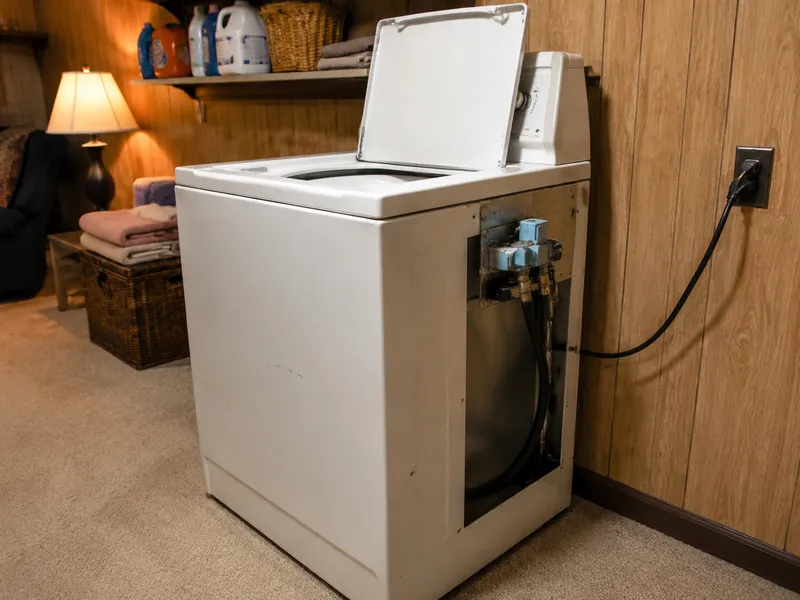
If the repair estimate for a washer is below 50% of buying a comparable new model and the machine is under 8 years old, fixing is almost always the better financial decision. Technicians across NYC use that 50/50 rule for everything from a stuck lid switch to a failed control board. For a typical mid‑range Whirlpool or GE top‑loader, repair costs range from $150 for a simple belt job to $350 for a water inlet valve, while a brand‑new equivalent runs $600–$700. Add New York’s 8.875% sales tax and a $50–$100 haul‑away fee — required by many buildings — and the actual out‑the‑door replacement figure jumps to $750–$800. So a $350 repair on a $700 washer ends up saving you well over $400 — and you avoid the hassle of scheduling delivery in a walk‑up.
Which washing machine brands hold their value for repair?
Premium brands like Miele and Speed Queen can last 15+ years, so even a $600 repair can be worthwhile if the machine is otherwise solid; mainstream brands like Whirlpool or LG are generally worth fixing until they pass the 10‑year mark. Miele’s sealed drum and commercial‑grade bearings rarely fail; I’ve yet to see a transmission go on a Speed Queen in over a decade of service calls in Queens and Brooklyn. On a 7‑year‑old LG, a $450 control board replacement makes sense, but by year 12 you’re dealing with worn suspension rods and spider‑arm cracks — then replacement often wins. Before you scrap a machine, a technician will test the transmission for grinding noise and feel for drum bearing play; those two components are the most expensive and the best guide to the repair‑vs‑replace call.
Why NYC apartment dwellers tend to repair instead of replace
eco‑service.com has found that NYC homeowners often choose repair because replacing a unit in a walk‑up building requires navigating stairs, elevator restrictions, and building insurance rules — costs that can add $200 or more. Pre‑war co‑ops with narrow stairwells and no freight elevator turn appliance deliveries into multi‑hour ordeals; repair sidesteps that entirely. For a fifth‑floor walk‑up, washing machine repair NYC becomes the only hassle‑free option; a water inlet valve replacement ($120–$250) takes one technician an hour, while a new machine delivery demands a certificate of insurance, a $200 elevator reservation, and a team of movers. Our technicians have watched a $250 valve replacement save a landlord $1,200 once you factor in delivery fees, lost rent, and the headache of coordinating tenant schedules.
Signs Your Washing Machine Transmission Is Failing (and What to Do)
A failing transmission can leave your washer unable to agitate or spin, and ignoring the warning signs leads to more expensive damage. Here’s how to tell if your machine’s transmission is on its way out.
Is the agitator moving sluggishly or not at all?
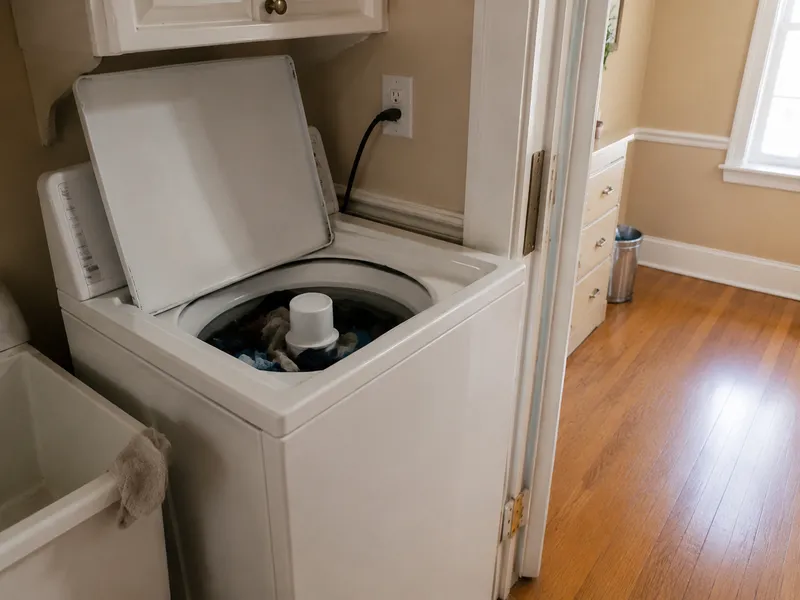
If the agitator in a top‑load washer barely moves or stops while the motor hums, the transmission likely has stripped gears or a worn cam. In direct-drive machines from Whirlpool, Kenmore, or Maytag, the transmission’s cam kit and spline shuttle between agitate and spin; when the spline shears, the agitator freezes while the motor labors. You might find clothes still sopping after the cycle—the transmission can’t engage the shaft. On a service call in Brooklyn, I’ve seen where a seized thrust bearing scored the input shaft, leaving fine metal powder in the gearcase oil. A cam and seal repair typically runs around $300. Don’t keep running it — seized transmission components can overheat and damage the motor, turning a $300 repair into a $600+ motor replacement.
Loud humming or grinding during spin cycle?
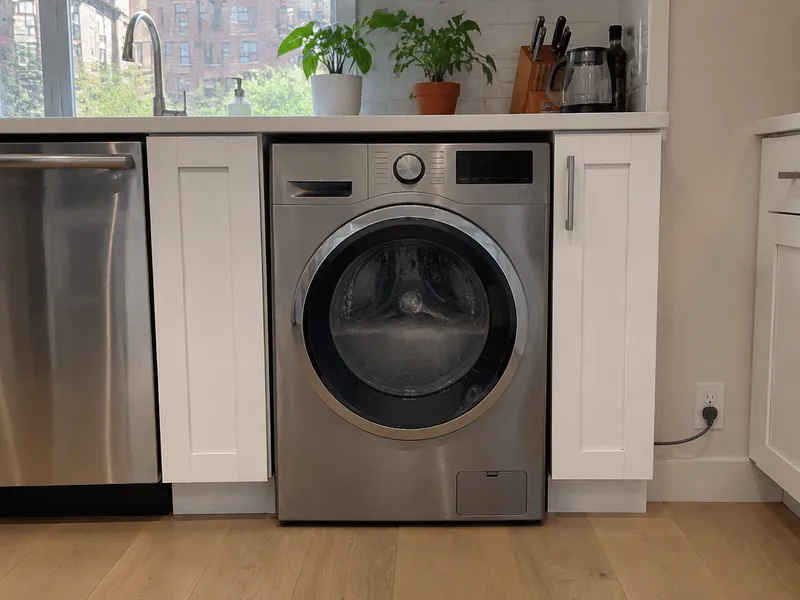
A high‑pitched whine or grinding noise that gets worse with a heavy load often signals transmission bearing failure, especially in front‑load machines like LG or Samsung. The sound comes from hardened steel balls rubbing against a pitted race, and once the grease inside the bearing cooks off from heat, metal-on-metal contact accelerates quickly. I’ve opened up a Samsung drum where the rear bearing cage had fractured, spilling needle rollers into the sump. The noise typically starts soft during weekends when the machine runs lighter loads, then becomes a full-throated rumble during a heavy Monday wash. Transmission noise is distinct from belt squeal—a belt will slip and make a screeching sound; a transmission failure produces a low growl or rattle that deepens as the drum picks up speed.
What should you do when you suspect transmission failure?
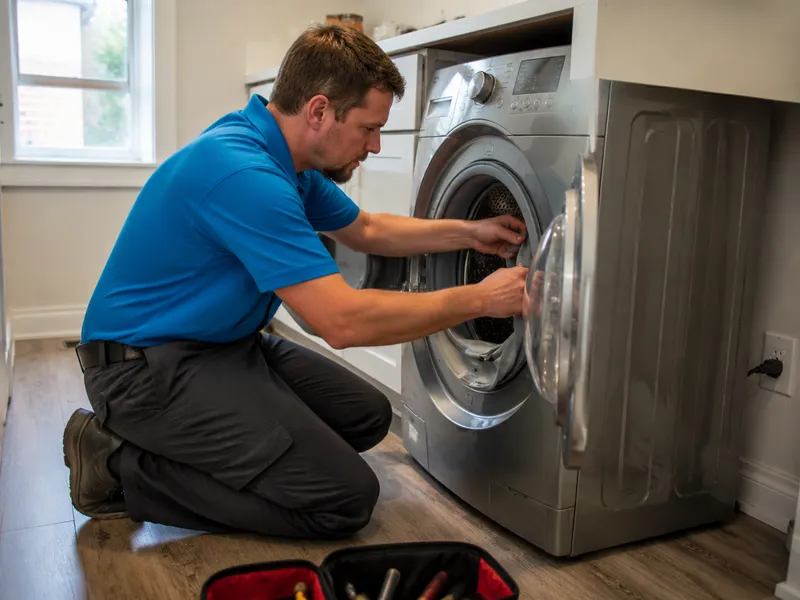
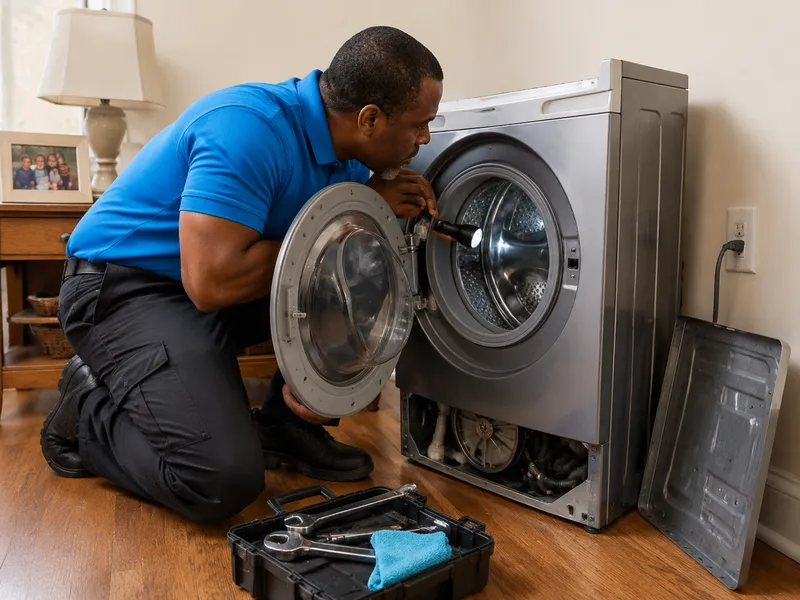
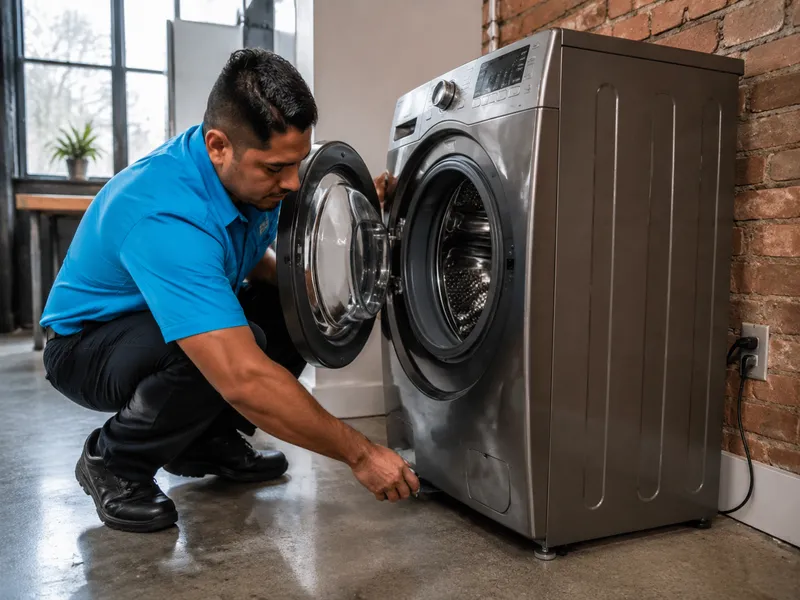
You can book a diagnostic with eco‑service.com; our technician will listen for abnormal noises, check for oil leaks under the washer, and rotate the input shaft by hand to confirm transmission damage within 15–30 minutes. We remove the drive belt first to isolate the gearbox, then turn the input shaft and feel for gritty resistance or notchiness that signals worn gears. In some cases, we use a mechanic’s stethoscope to pinpoint the bearing whine while the machine runs under load. Our vans stock the most common transmission cams and seals for top-loaders, so we can often fix a locked agitator drive on the first visit. We’ll give you a straight answer on cost vs. replacement, and because the diagnostic is free when you proceed with the repair, you won’t pay for an inspection that leads to action.
How to Extend the Life of Your Washing Machine in NYC
A washer that lasts well beyond the typical 10–13 years isn’t luck — it’s a series of small, consistent maintenance habits. Follow these practical steps to keep your machine running smoothly in NYC’s hard‑water, tight‑space conditions.
Daily Habit: Leave the Door and Drawer Open After Every Cycle
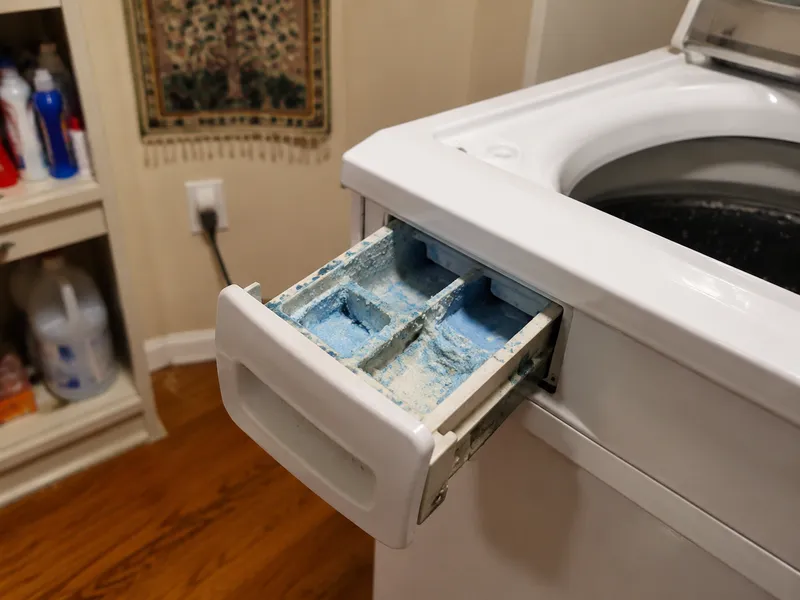
- Open door and drawer: After every cycle, leave the door slightly open and the detergent drawer out to let trapped moisture evaporate.
- Wipe door seal: Use a dry cloth on the rubber gasket weekly to remove film and detergent residue; this alone cuts musty odor buildup.
- HE detergent dose: Stick to the manufacturer’s recommended HE detergent amount — excess soap leaves residue that traps bacteria and degrades the gasket.
- Prevent leaks: Mold-damaged door gaskets cause front-loader water leaks in tight NYC bathroom closets where humidity never fully drops.
Monthly Maintenance: Clean the Drain Pump Filter and Inspect Hoses
- Clean the filter monthly: Remove the drain pump filter and rinse out lint, coins, and debris. A five-minute job that stops mid-cycle shutdowns.
- Check hoses for cracks: Run your hand along the water supply hoses; any bulging or cracks mean they need replacing — do it every five years.
- Locate your filter: On a front-loader, it’s behind a small door; on a top-loader, check the front panel. Your manual has the exact spot.
- Prevent $200 motor burnout: A clogged filter overworks the drain pump motor — a burnout costs about $200 and is easily prevented by monthly cleaning.
Leveling and Load Management: Two Hidden Destroyers
- Level the machine: An unlevel washer increases vibration, accelerating wear on drum bearings and suspension. Fix it with a bubble level and leg adjustments.
- Avoid overloading: Respect the manufacturer’s weight limit. Overloading strains the belt, transmission, and motor, cutting component life by up to 40% in our experience.
- Spot shock absorber wear: As an eco-service.com tech, I’ve leveled dozens of washers with failed shock absorbers — a $5 fix saves a $300 repair.
Annual Checks: Inlet Screens and Water Pressure
- Inspect inlet screens annually: Sediment buildup on the screens reduces fill speed and overheats the inlet valve. Rinse them under running water.
- Check water pressure: Test with a gauge; if pressure exceeds 120 psi, installing a pressure-reducing valve prevents burst hoses and inlet valve damage.
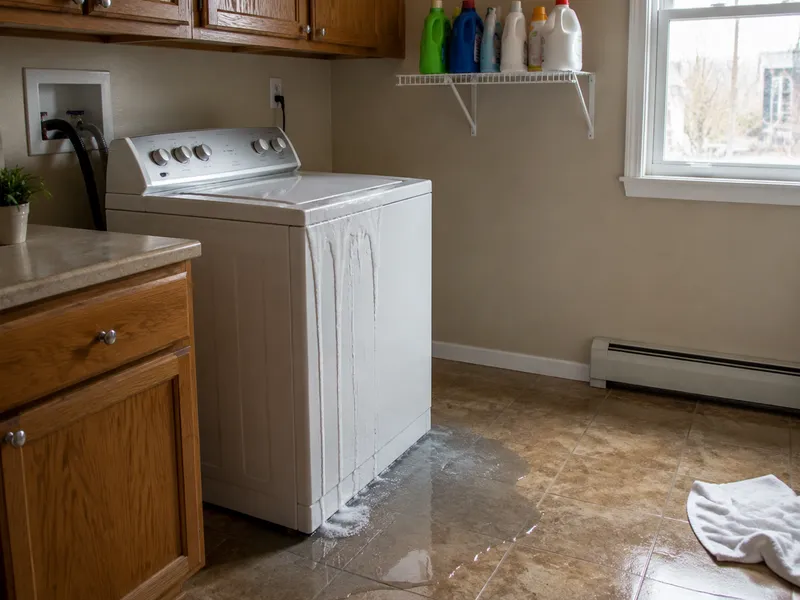
- Prevent floods: High water pressure is a top cause of sudden washer floods in NYC apartments. A $50 pressure-reducing valve install avoids thousands in water damage.
The Hidden Costs of Washing Machine Repair in NYC
When you book a washing machine repair, the quoted price for the main part often doesn’t tell the whole story. Here are the extra charges NYC homeowners frequently encounter — and how to avoid surprises.
Diagnostic and service‑call fees: know when they apply
- Diagnostic fee waived with repair: Eco Service NY waives the diagnostic fee when you book washing machine repair; if you decline, a standard service‑call fee applies, which in the industry runs $50–$150.
- Competitor call‑out charges: Many NYC repair shops don’t disclose call‑out fees until after the visit — always confirm whether the diagnostic is free if you proceed with the work.
- Hidden‑fee alert: Some services quietly add the diagnostic charge to your final invoice even when you hire them; clarify the policy upfront to keep the bill honest.
Additional parts and access charges
- Parts not in the initial quote: Water supply hoses, shut‑off valves, and drain hoses are often excluded from the estimate, adding $10–$50 each if replacement is needed.
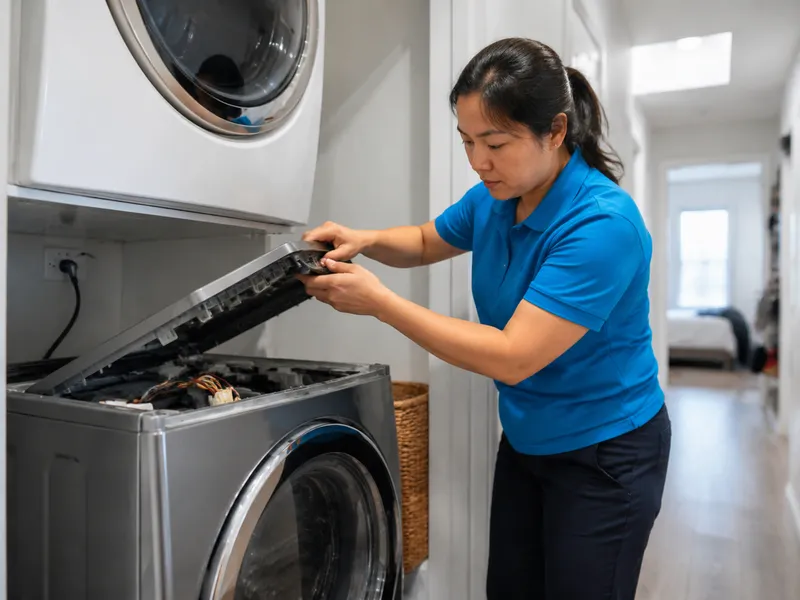
- Access labor surcharges: Stackable front‑loader disassembly or a cramped laundry closet can tack on $50–$100 in labor — we scope the site during diagnostic and bundle every access cost into one upfront price.
- Before‑you‑book practice: Request a full‑quote that covers all replacement parts and access labor; our technician prepares a line‑item bundled quote after the evaluation.
NYC‑specific surcharges and taxes
- Sales tax on parts and labor: An 8.875% tax applies to the whole job, so a $400 repair ends up at $435.50 before any surcharges.
- Borough‑wide pricing with no location fees: Some competitors add surcharges for Staten Island or far‑flung Bronx calls; we offer single‑rate pricing across all five boroughs.
- Trip and congestion fees: A “trip fee” or “congestion surcharge” can sneak onto competitor invoices, pushing a $400 repair to $480 — scrutinize the final bill line by line.
Conclusion
Washing machine repair doesn’t have to be a leap of faith. The key takeaways below summarize the most reliable ways to decide, diagnose, and maintain your washer in NYC.
Main Takeaways
- Repair vs replace: For washers under 8 years old, repair is almost always the smarter financial move — especially in NYC, where delivery and disposal can add $200+.
- Transmission failure: Sluggish agitation, grinding noises, or oil leaks point to a failing transmission; a professional diagnostic prevents motor damage before it happens.
- Preventive habits: Simple habits like leaving the door open after a cycle and cleaning the drain pump filter monthly can add years to your washer’s life.
- Hidden costs: Diagnostic fees, access charges, and New York City sales tax can inflate a final repair bill by 20% or more — always ask for an all-inclusive quote before booking.